
Helping your brain injury
Understanding and Restoring Brain Function After Trauma
A brain injury can change how you think, move, feel, or experience the world — even if your scans appear “normal.” Whether it’s from a concussion, accident, fall, or athletic injury, the effects of traumatic brain injury (TBI) and mild traumatic brain injury (mTBI) often go far beyond the moment of impact.
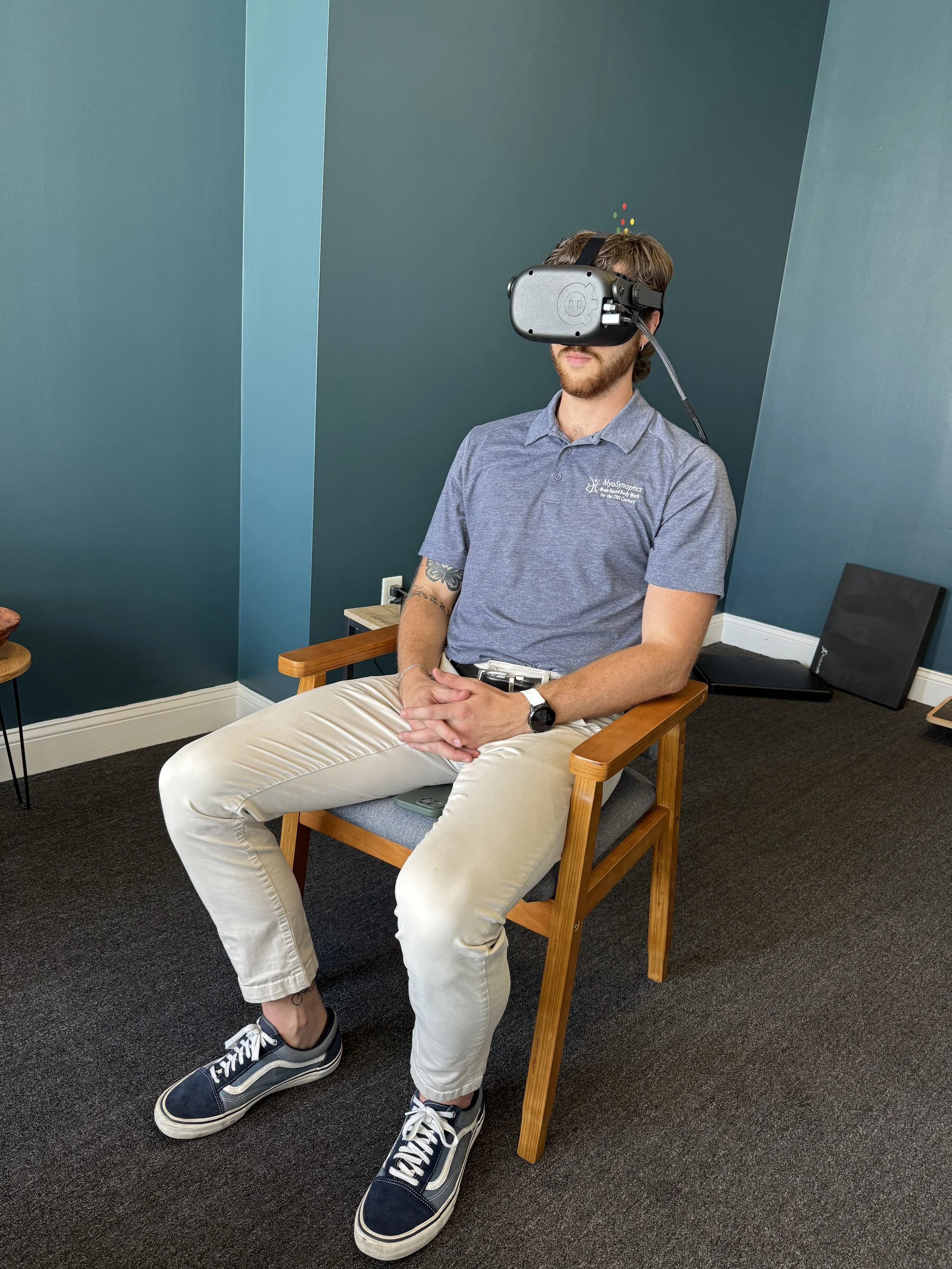
Helping brains recover
At SCC Neuro, we specialize in helping patients recover optimal brain function through personalized, non-invasive treatments based on the science of functional neurology and neuroplasticity — the brain’s ability to rewire and restore itself.
What Happens After a Brain Injury
Even a mild head injury can temporarily disrupt how brain cells communicate. The affected networks may include areas that control:
Balance and coordination
Attention and memory
Vision, eye movement, or spatial awareness
Mood, energy, and autonomic regulation
Though traditional imaging like CT or MRI might not show damage, functional changes in communication between brain regions can lead to lingering symptoms.
Common Symptoms
Headaches or pressure in the head
Problems concentrating or remembering
Dizziness, light sensitivity, or motion intolerance
Fatigue and brain fog
Mood changes, anxiety, or irritability
Sleep disturbances or sensory overload
These are signs of disrupted neural communication pathways, not necessarily structural injury.
Functional Neurology Evaluation
Our comprehensive assessment looks beyond symptoms to identify how specific areas of your brain are functioning and interacting.
This may include:
Neurological and balance testing
Eye movement and vestibular evaluation
Cognitive and memory screening
Autonomic and sensory system assessment
By mapping which regions are underactive, fatigued, or out of sync, we can target them precisely with neurorehabilitation exercises designed to promote recovery.
Personalized Neurorehabilitation
Each care plan is unique and may include:
Vestibular and ocular-motor therapy
Cognitive retraining and brain endurance exercises
Coordination and balance therapy
Sensory recalibration and movement training
Neurofeedback and autonomic regulation
Our programs are designed to rebuild functional efficiency, synchrony, and resilience — not just relieve symptoms.
Recovery & Hope
Healing after a brain injury is possible. With the right approach, the brain can adapt, strengthen connections, and restore proper function.
At SCC Neuro, every program is grounded in neuroscience and compassion — helping you return to focusing, thinking, and living well again.
Traumatic brain injury (TBI) and mild traumatic brain injury (mTBI) result in complex neurophysiological sequelae affecting cognitive, vestibular, ocular, and autonomic networks. At SCC Neuro, the clinical emphasis is on identifying and rehabilitating functional disconnections rather than solely structural lesions.
Mechanisms of Dysfunction
Following brain injury, several pathophysiological processes occur:
Diffuse axonal injury leading to delayed neural transmission
Neurovascular and metabolic mismatch resulting in regional hypometabolism
Altered cerebello-thalamo-cortical connectivity affecting coordination and focus
Autonomic imbalance and impaired homeostatic regulation
Oculomotor and vestibular integration errors disrupting spatial orientation
Even without structural damage visible on neuroimaging, these functional impairments interfere with the brain’s ability to synchronize sensory, motor, and cognitive systems.
Clinical Manifestations
Common presentations include:
Cognitive slowing and executive dysfunction
Dizziness and disorientation (visual-vestibular mismatch)
Postural instability and motor coordination deficits
Visual convergence insufficiency and motion sensitivity
Fatigue, mood lability, and autonomic dysregulation
Sleep and sensory hypersensitivity disorders
These findings reflect dysfunctional neural network integration rather than localized pathology.
Functional Neurological Evaluation
Our clinicians employ a neurophysiologically directed assessment model involving:
Comprehensive quantitative neurocognitive and oculomotor testing
Autonomic profiling (autonomics, pupillometry)
Dynamic postural and vestibular evaluation
Cerebellar and prefrontal function assessment
Dual-task balance and motor-cognitive interaction testing
Findings yield a regional map of neural inefficiency guiding targeted rehabilitation.
Functional Neurological Evaluation
Our comprehensive evaluation explores:
Eye movement metrics (saccadic latency, pursuit gain, VOR testing)
Postural and optokinetic reflex analysis
Cognitive load tolerance and dual-task performance
Autonomic profiles including HRV and pupillary dynamics
Cerebellar, parietal, and frontal lobe activation asymmetries
Quantitative findings inform precisely targeted interventions to promote hemispheric balance and reestablish sensory-motor congruency.
Neurorehabilitation Framework
Intervention protocols emphasize adaptive activation within the patient’s tolerance threshold to induce durable, region-specific plasticity. Examples include:
Vestibular recalibration and gaze stabilization
Visual-motor and vergence rehabilitation
Coordinative cerebellar exercises for timing and precision
Autonomic regulation (orthostatic adaptation, HRV training)
Neurocognitive and dual-task performance training
Treatment frequency and intensity are continuously adjusted based on objective markers such as oculomotor control, balance metrics, and symptom provocation thresholds.
Rehabilitation Goals
Our objective is long-term functional integration and network optimization, focusing on:
Normalization of interhemispheric synchrony
Restoration of efficient neurovascular coupling
Improved cognitive processing speed and attention
Enhanced visual-vestibular and cerebellar performance
Autonomic stability under physical and cognitive load
Why SCC Neuro
Postgraduate training in Clinical Neuroscience and Functional Neurology
Evidence-based models rooted in neurophysiological assessment
Precision treatment protocols built on measurable outcomes
Multimodal, patient-specific neurorehabilitation methodology
Professional Consultation and Referral
Clinicians seeking collaborative management or referral for patients with chronic post-concussion or brain injury symptoms are encouraged to connect with SCC Neuro for specialized functional neurological assessment and care.
Schedule a Comprehensive Neurological Evaluation
Cognitive fatigue can indicate widespread inefficiencies in brain network integration following injury, illness, or chronic stress. Comprehensive neurological assessment and targeted neurorehabilitation can restore performance capacity and mental stamina.
Contact SCC Neuro to schedule a cognitive and functional brain evaluation.