
Muscle Sprains, Strains & Injury Rehabilitation
When an injury happens — a twisted ankle, pulled muscle, or painful back strain — it might seem like the problem is purely physical. But in many cases, healing involves not only the muscles and joints, but also the nervous system’s control of movement, coordination, and balance.
At SCC Neuro, we look deeper than the injury itself. By combining functional neurology, rehabilitation science, and neuro-motor re-education, we help patients not only recover, but move better and prevent recurrence.
Common injuries we help are acute and chronic back pain, neck pain, shoulder pain, hip pain, knee pain, and ankle pain.
Understanding Sprains and Strains
Sprains involve stretched or torn ligaments — the tissue connecting bones and stabilizing joints.
Strains affect the muscle fibers or tendons — the structures responsible for movement and force generation.
Pain, stiffness, swelling, and limited motion are common, but what often lingers after healing is poor movement control or re-injury risk caused by disrupted neural input.
Why Muscle and Nerve Recovery Matter
After injury, the body adapts — sometimes in ways that create new problems. The brain may alter how it recruits muscles, perceives movement, or stabilizes the injured area. These adaptations can result in:
Weakness or delayed muscle activation
Loss of coordination or proprioception (body awareness)
Chronic pain patterns
Recurrent injury under stress
That’s why recovery isn’t just about strength — it’s about retraining the brain-muscle connection.
Our Functional Neurology Approach
We start with a detailed neurological and musculoskeletal evaluation, assessing:
Joint stability and movement patterns
Muscle firing sequences
Balance and sensory feedback
Reflex integrity and postural control
This helps identify not only where the body is injured, but how the nervous system is managing the injury.
Rehabilitation Program
Each care plan is customized to your physiology and activity level. Treatment may include:
Gentle manual therapy and tissue mobilization
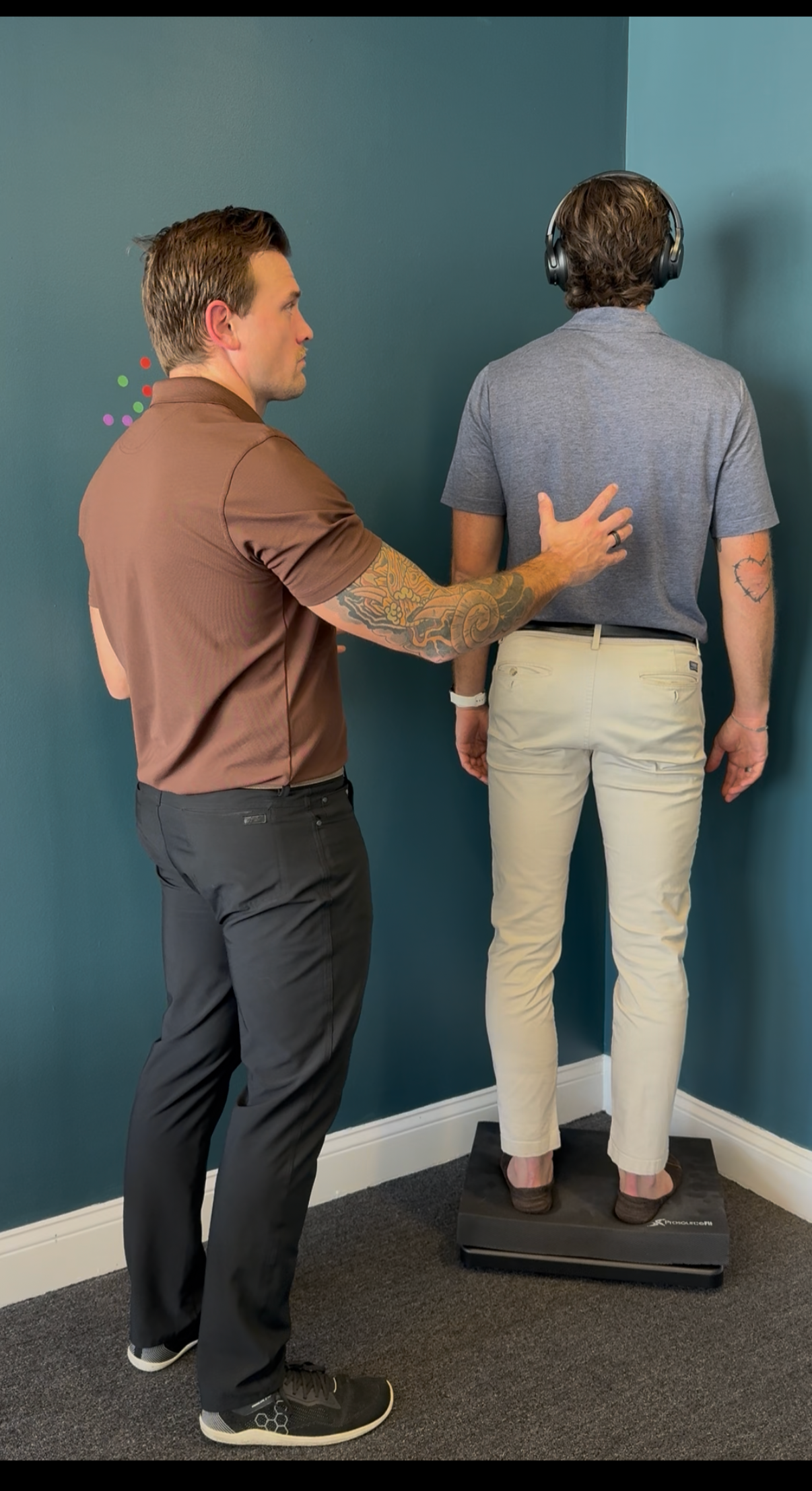
Proprioceptive and balance training
Movement pattern retraining for healthy coordination
Neuromuscular re-education exercises
Low-load sensorimotor activation and vestibular input where needed
Our goal is to restore functional movement control, reduce pain, and help your body perform efficiently again.
Who We Help
We work with everyone from recreational athletes to active professionals, as well as those recovering from accidental or repetitive injuries. Whether you’re trying to get back to running, working out, or simply moving without pain, SCC Neuro delivers individualized care that aligns with your goals.
Get Back to What You Love
If muscle or joint pain is slowing your life down, let’s find out what’s really causing it — and restore movement from the inside out.
Functional Neurological and Neuro-Motor Rehabilitation for Musculoskeletal Injury
Muscle sprains and strains are not solely biomechanical events; they represent disruptions in the sensorimotor and proprioceptive feedback loops integral to coordinated function. At SCC Neuro, rehabilitation incorporates functional neurology, emphasizing the restoration of central and peripheral integration responsible for motor output precision, stability, and neuromuscular control.
This approach aligns with current clinical neuroscience and neurophysiology principles emphasizing central modulation of musculoskeletal control.
Neurophysiological Considerations
Musculoskeletal injuries result in:
Altered afferent signaling from muscle spindles, Golgi tendon organs, and joint mechanoreceptors
Degraded cerebellar and cortical representation of movement patterns
Compensatory hyperactivity or under-recruitment of agonist/antagonist muscle groups
Impaired feedforward control from premotor and supplementary motor cortices
These functional asymmetries predispose patients to movement inefficiency, recurrent injury, and chronic pain syndromes.
Clinical Presentation
Patients commonly present with:
Reduced joint stability or endurance under load
Altered coordination and delayed muscle activation timing
Persistent pain despite normal imaging findings
Impairment of balance or fine motor control
Secondary headaches or neck discomfort from compensatory strain
Such findings indicate neural maladaptation beyond localized soft tissue injury.
Functional Neurological Evaluation
Informed by methodologies developed in applied clinical neuroscience, our evaluation includes:
Muscle activation timing and motor recruitment mapping
Oculomotor and vestibular system assessment for balance-related injuries
Proprioceptive and postural reflex testing
Cortical and cerebellar activation asymmetry analysis during movement tasks
Objective assessment guides interventions that integrate musculoskeletal reconditioning with neurofunctional modulation.
Rehabilitation Framework
Treatment focuses on neuro-motor reintegration and sensorimotor precision through:
Graded neuromuscular re-education using position, load, and timing-based cues
Proprioceptive recalibration training (joint position sense, balance perturbation, dynamic stabilization)
Cerebellar activation to normalize motor learning and coordination
Visual and vestibular integration drills for whole-body movement integrity
Soft-tissue and joint mobilization techniques to optimize afferent input and reduce nociceptive load
Therapeutic dosing is titrated to neural tolerance levels, promoting recalibration without overactivation or fatigue.
Clinical Objectives
Our interventions seek to:
Restore efficient motor pattern organization
Re-establish proprioceptive mapping and reflexive stability
Enhance cerebellar-telencephalic network synchronization
Prevent recurrence through neural adaptation and endurance training
The result is functionally complete rehabilitation — not just symptom resolution.
Why SCC Neuro
Clinicians trained in Functional Neurology and Rehabilitative Neuroscience
Integration of musculoskeletal medicine, neuroplasticity frameworks, and sensorimotor control
Advanced evaluation tools for proprioceptive and vestibular function
Personalized neuro-rehabilitation programs built for sustainable recovery
Professional Consultation and Referral
SCC Neuro collaborates with orthopedists, physical therapists, and sports medicine providers to ensure continuity of care for patients requiring integrated neurological and musculoskeletal rehabilitation strategies..