
Stress & Anxiety
Rebalancing Your Brain and Nervous System
Home | Who we help | Stress & Anxiety
Everyone experiences stress — but when it becomes chronic, your body and brain can lose their natural rhythm of recovery. You might notice symptoms that go far beyond mental tension — like poor sleep, digestive issues, muscle pain, dizziness, or constant fatigue.
At SCC Neuro, we help patients understand and heal from chronic stress and anxiety by addressing what’s happening in the brain and nervous system — not just the surface symptoms.
Why Stress Affects the Whole Body
Your stress response system is powered by the autonomic nervous system (ANS) — the same system that regulates your heartbeat, digestion, temperature, and energy.

When this system becomes overactive or imbalanced due to prolonged physical or emotional stress, your body stays in “fight-or-flight” mode, it includes:
Racing heart, sweating, or shallow breathing
Trouble focusing or relaxing
Sleep problems or restlessness
Fatigue or brain fog
Tension headaches or tight muscles
Feeling anxious or “on edge” for no clear reason
Over time, this constant overactivation can affect brain function, hormone regulation, and even immune balance.
Functional Neurology’s
Role in Stress & Anxiety
Functional neurology helps uncover how your brain processes and regulates stress at a neurological level. Stress resilience depends on proper communication between the prefrontal cortex, brainstem, cerebellum, and autonomic centers.
When these networks are dysregulated, even small triggers can cause exaggerated physical or emotional responses.
At SCC Neuro, we focus on restoring autonomic flexibility — your nervous system’s ability to adapt and calm itself efficiently.
Your Evaluation
May Include
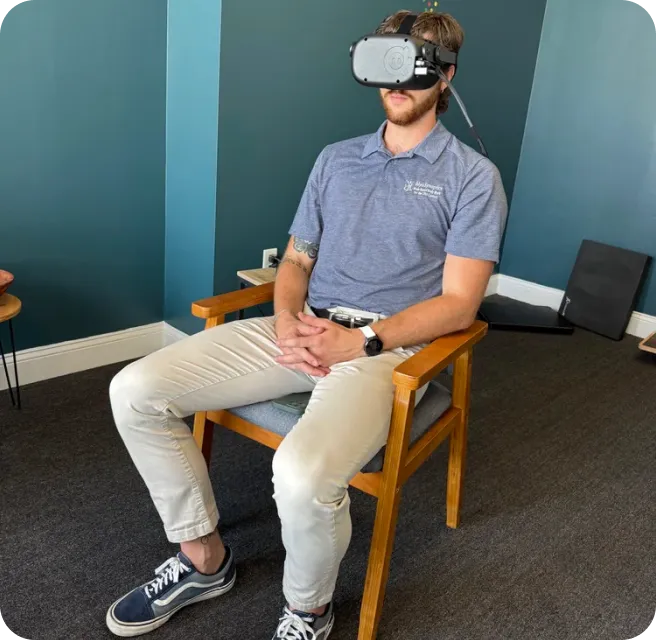
Neurocognitive and autonomic function testing
Autonomic analysis
Eye movement and stress reactivity testing
Balance, coordination, and cerebellar function assessments
Findings help us to retrain your nervous system’s sense of safety and calm.
Personalized
Neurorehabilitation
Treatment plans are customized and may include:
Autonomic balance training (stimulating parasympathetic recovery)
Breathing and postural feedback exercises
Visual and vestibular recalibration to reduce “fight-or-flight” activation
Gentle neuro-activation and sensory retraining
Mind-body regulation techniques informed by neuroscience
Instead of managing stress through willpower alone, we retrain your brain to respond appropriately again — so calm feels natural, not forced.
What Patients
Often Notice
Better emotional regulation
More consistent energy and mood
Improved focus and mental clarity
Fewer physical stress symptoms
Greater sense of calm and resilience
Finding Your Way
Back to Balance
You don’t have to live in survival mode. With precise neurological care and guided retraining, your brain can learn to regulate stress more efficiently.
Functional Neurological Modulation of Stress and Anxiety
Chronic stress and anxiety reflect dysregulation within the central and autonomic nervous systems, leading to maladaptive physiological and emotional responses.
At SCC Neuro, our approach to stress and anxiety management integrates functional neurology and neurophysiological rehabilitation, targeting the cortico-limbic-autonomic axis to restore adaptive regulation and network efficiency.
Clinical Objectives
Enhanced stress tolerance and autonomic flexibility
Increased HRV and vagal efficiency
Improved prefrontal modulation of limbic output
Normalized sleep and energy regulation
Reduction in somatic or anxiety-related symptom patterns
Through consistent engagement, patients gain sustainable neurophysiological balance and functional resilience.
Clinical Goals
Functional outcomes include:
Enhanced autonomic stability and cardiovascular control
Improved cognitive endurance and orthostatic tolerance
Normalized HRV and baroreflex sensitivity
Reduction in symptom provocation with daily activity
Increased parasympathetic resilience and systemic regulation
The result is functionally complete rehabilitation — not just symptom resolution.
Why SCC
Neuro
Clinicians with postgraduate training in Functional Neurology, Clinical Neuroscience, and Autonomic Regulation
Use of objective neurophysiological testing to track progress
Integration of multimodal rehabilitation with neuroscience-based psychology principles
Focus on restoring network efficiency, not merely symptom suppression
35+ AND WANT TO AGE PROACTIVELY
35+ AND WANT TO AGE PROACTIVELY
35+ AND WANT TO AGE PROACTIVELY
35+ AND WANT TO AGE PROACTIVELY
35+ AND WANT TO AGE PROACTIVELY
35+ AND WANT TO AGE PROACTIVELY
35+ AND WANT TO AGE PROACTIVELY
35+ AND WANT TO AGE PROACTIVELY
Professional Consultation
and Referral
Patients referred for chronic stress, post-concussion emotional dysregulation, or autonomic instability benefit from SCC Neuro’s integrative model.
Patients referred for chronic stress, post-concussion emotional dysregulation, or autonomic instability benefit from SCC Neuro’s integrative model.
Our Story
SCC Neuro was founded to help patients find a new path forward by treating the brain as the foundation of overall health.
Our practitioners take time to understand your full health story, using neurological exams, functional assessments, and evidence-based therapies to improve brain-body communication.
© 2026 SCC Neuro. All rights reserved.
Connect With Us


